
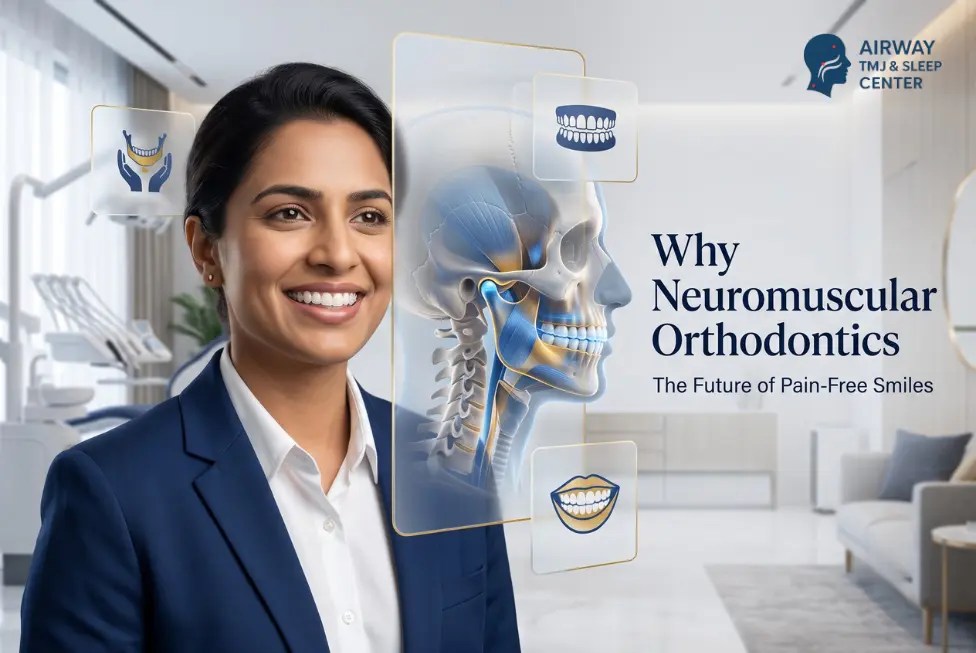
Neuromuscular Orthodontics: The Future of Pain-Free Smiles
Quick answer: Neuromuscular orthodontics is an approach that aligns your teeth to the natural resting position of your jaw and muscles – not just to a textbook idea of straight teeth. By correcting how the jaw, bite, and facial muscles work together, it produces a smile that is not only beautiful but comfortable and stable, with a much lower chance of relapse, jaw pain, or TMJ problems later. In short: traditional braces move teeth; neuromuscular orthodontics balances the whole system the teeth live in.
| Key takeaways
✓ Neuromuscular orthodontics aligns teeth to the jaw’s natural, relaxed position – addressing function, not just looks. ✓ It starts by measuring how your muscles and jaw actually move, then plans treatment around that. ✓ Benefits: a more comfortable bite, balanced facial appearance, easier breathing, and less relapse. ✓ It is ideal for people with jaw pain, TMJ symptoms, grinding, or discomfort after past braces. ✓ It can also optimise the airway – supporting better breathing, sleep, posture and lasting relief for TMJ headaches. ✓ The result is a smile that looks good and feels good – and tends to stay put. |
What Is Neuromuscular Orthodontics?
Most people think orthodontics is about one thing: making crooked teeth straight. You get braces or aligners, wait a year or two, and your smile looks better. But a straight smile is not always a comfortable one. Plenty of people finish treatment with neat teeth and still wake up with a tight jaw, an aching bite, or clicking when they open wide.
Neuromuscular orthodontics looks deeper. It is built on the relationship between three things that traditional orthodontics often treats separately: the teeth (how they line up), the jaw joints (how the jaw opens and rests), and the muscles and nerves that move the jaw. Instead of forcing teeth into a fixed position, it first finds where your jaw naturally wants to sit – its relaxed, balanced resting position – and then aligns the teeth to support that. It is dentistry that listens to how your body actually moves, rather than just reading an X-ray.
Neuromuscular Orthodontics vs Traditional Braces
Both can give you straighter teeth. The difference is in what each one is actually solving for. Traditional orthodontics optimises tooth position; neuromuscular orthodontics optimises the way your whole bite functions. The table makes the contrast clear.
| Feature | Neuromuscular orthodontics | Traditional braces |
| Main focus | Teeth + jaw joints + muscles working together | Position of the teeth |
| Starting point | The jaw’s natural, relaxed resting position | A target tooth alignment |
| Comfort | Designed to reduce strain on jaw and muscles | Can leave bite tension unaddressed |
| TMJ symptoms | Aims to relieve clicking, jaw pain, headaches | Not specifically designed to address them |
| Relapse risk | Lower – bite matches muscle balance | Higher if the bite was never corrected |
| Added benefits | Facial balance, easier breathing | Mainly cosmetic alignment |
Why this matters: a common frustration after ordinary braces is relapse – teeth drifting back over time. That often happens because the underlying bite and muscle balance were never corrected, so the system keeps pulling the teeth out of line. Align the bite to the muscles, and the result is far more likely to last.
How Does Neuromuscular Orthodontics Work?
The process is methodical, and it starts with measurement rather than assumption:
- Advanced tools record how your jaw moves, how your muscles fire, and where your bite feels most relaxed. This shows the true resting position your jaw is trying to reach.
- Finding the rest position. Using that data, the dentist identifies the jaw’s balanced, low-tension position – often very different from the strained position the bite has forced it into.
- Stabilising with an orthotic. A custom orthotic or splint can gently guide the jaw to this healthier position so the muscles and joint can settle and any pain can ease before tooth movement begins.
- Aligning the teeth. Only then are the teeth moved – with aligners or braces – to fit the corrected jaw position, so the final bite supports the muscles instead of fighting them.
Because treatment respects how the jaw was meant to function, the experience tends to be more comfortable than people expect – which is why it is often called pain-free orthodontics. Not zero sensation, but working with the body rather than against it.
Benefits of Neuromuscular Orthodontics
A more comfortable, pain-free experience
By aligning the bite to the body’s natural resting state, there is less tension on the jaw joints and surrounding muscles. Many patients find that chronic headaches, jaw pain, and clicking begin to ease within weeks of starting treatment.
Better facial balance and function
When the jaw sits in its ideal position, the whole face benefits – improved symmetry, a more relaxed smile, and a naturally balanced profile. Function improves too: easier chewing and smoother jaw movement.
Easier breathing
Jaw position and the airway are linked. Guiding the jaw forward into its proper place can open up space at the back of the throat, which in some patients reduces snoring and supports better breathing during sleep – a benefit no purely cosmetic treatment can offer.
Long-term stability
Because the new bite matches your natural muscle balance, there is less post-treatment strain and a lower chance of relapse. Put simply, the smile stays where it belongs.
Airway Optimisation: The Bigger Benefit
One of the most important advances in modern neuromuscular orthodontics is that it does far more than straighten teeth – by guiding the jaw and tongue into their ideal position, it can also optimise your airway. A more open airway means easier breathing, deeper sleep, and a meaningful improvement in day-to-day quality of life.
Because so many problems trace back to a compromised airway and increased airway resistance, this wider, airway-focused approach can help with a surprising range of issues:
- Better breathing and sleep. Opening the airway supports clearer breathing at night and more restful, restorative sleep.
- Sleep-disordered breathing. It can form part of the solution for sleep apnea, upper airway resistance syndrome (UARS), and compromised or restricted breathing – and the physical problems that come with them.
- The psychological side. Many of the mood, focus and energy problems linked to a compromised airway and poor sleep often improve once breathing and rest are restored.
- Stable relief for TMJ-related headaches and migraines. By correcting jaw position and easing airway resistance, it can offer a more lasting solution for TMJ-related headaches and migraines.
- Posture and the neck. A balanced jaw and open airway support better head and neck posture, which can ease cervical (neck) issues and improve overall body posture.
In short, neuromuscular orthodontics done with the airway in mind treats the whole system – the teeth, the jaw, the breathing, and the body – not just the smile.
Who Is Neuromuscular Orthodontics For?
It is not only for teenagers getting their first braces. Adults with discomfort or complex histories often benefit the most. Consider it if you:
- Have chronic jaw pain, tightness, or TMJ symptoms.
- Get frequent headaches or neck tension linked to your bite.
- Grind or clench your teeth (bruxism) or have facial muscle fatigue.
- Had braces before but still feel discomfort when biting, or your teeth have relapsed.
- Want a smile correction that solves function as well as appearance.
| Signs your bite – not just your teeth – needs attention
✓ Your jaw clicks, pops, or feels tight, especially in the morning ✓ You get headaches or facial pain that seem linked to clenching ✓ Your teeth feel like they don’t meet evenly when you bite ✓ You finished braces but still feel discomfort or your teeth shifted back ✓ You notice grinding, worn teeth, or jaw fatigue |
What to Expect at Your Consultation
A neuromuscular consultation goes beyond a quick look at your teeth. Expect a detailed bite and muscle analysis using diagnostic tools, a discussion of any pain, clicking, headaches, or breathing concerns, and a treatment plan tailored to your specific anatomy rather than a template. Many patients say they finally understand what has been causing their symptoms after this first visit – which is often half the battle.
Why Choose Airway TMJ & Sleep Center, Noida
Neuromuscular orthodontics needs a clinician who understands the joint, the muscles, the bite, and the airway as one connected system. At Airway TMJ & Sleep Center in Noida, Dr. Kishlay Gaur brings that focus, using detailed neuromuscular diagnostics so every treatment plan is built around your anatomy – not a one-size-fits-all approach. The philosophy is simple: orthodontics should never hurt, and a corrected smile should also be a healthier, more comfortable one. You get more than straighter teeth – you get a complete system of care that supports your bite, your comfort, and your overall well-being.
The Bottom Line
Neuromuscular orthodontics is a shift in how we think about straightening teeth. It is not just about how your smile looks – it is about how your teeth, jaw, and muscles work together. When they are in sync, everything feels easier: speaking, chewing, even breathing. And the result is more comfortable to achieve and far more likely to last. If you have been searching for a smile solution that fixes function as well as appearance, this is it.
Book a neuromuscular orthodontics consultation in Noida to see how comfortable – and how stable – your smile can be.