airwaytmjsleep.com

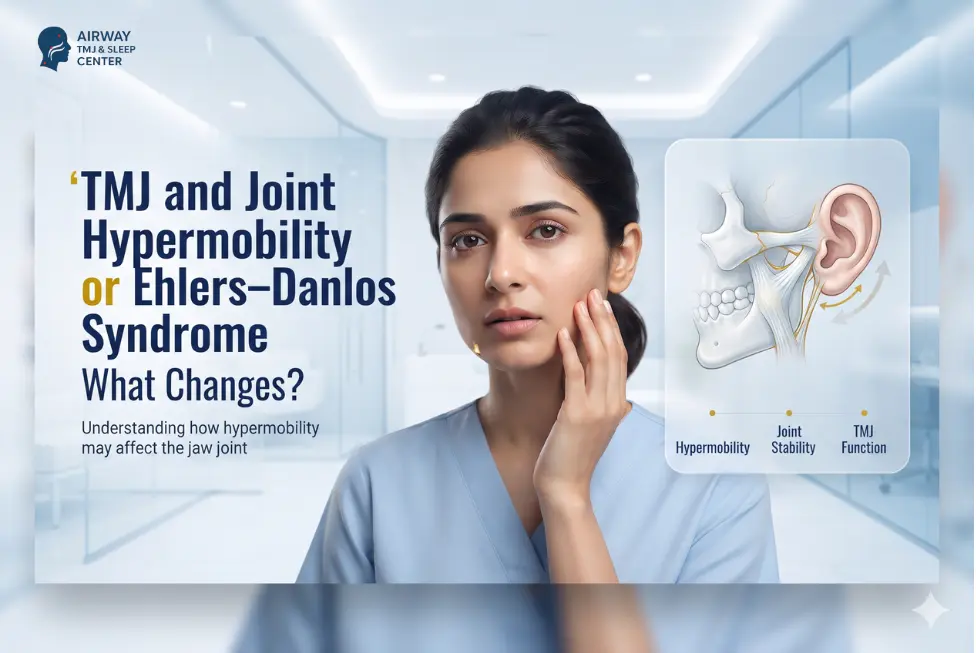
Premium TMJ healthcare banner showing a realistic adult touching the jaw with a subtle TMJ illustration highlighting joint hypermobility, increased movement, and changes in jaw stability associated with hypermobility or Ehlers–Danlos syndrome.

TMJ and Joint Hypermobility or Ehlers–Danlos Syndrome: What Changes?

Having hypermobile Ehlers–Danlos syndrome (hEDS), a hypermobility spectrum disorder (HSD) or generalized joint hypermobility may change how TMJ symptoms are assessed. Recurrent slipping, fixed dislocation, other joint instability and procedure triggers deserve attention. However, a click, wide opening or jaw pain cannot diagnose EDS, and not every hypermobile person has a TMJ disorder. Research is […]
Read More
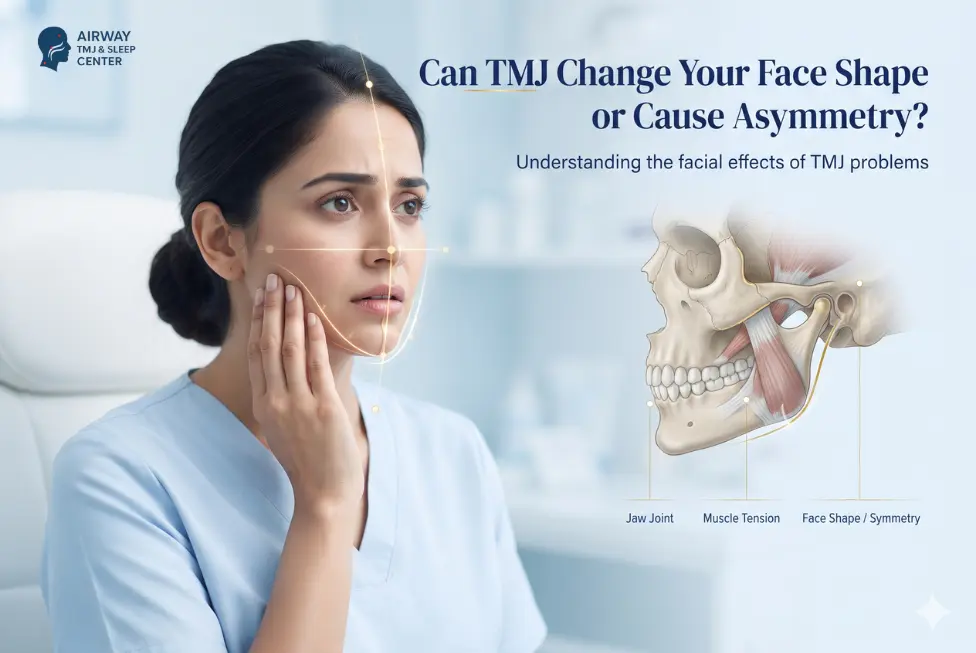
Premium TMJ healthcare banner showing a realistic adult with subtle facial symmetry and jawline comparison markers, highlighting the TMJ area near the ear and the possible connection between jaw imbalance, muscle tension, face shape changes, and facial asymmetry.

Can TMJ Change Your Face Shape or Cause Asymmetry?

TMJ disorders can sometimes make the face look temporarily uneven through muscle guarding, altered jaw posture or swelling. Ordinary TMD does not usually reshape facial bone. A progressively changing bite, chin position, jawline or facial asymmetry may signal a structural joint or jaw condition and deserves examination and selected imaging. Similar-looking selfies do not establish […]
Read More
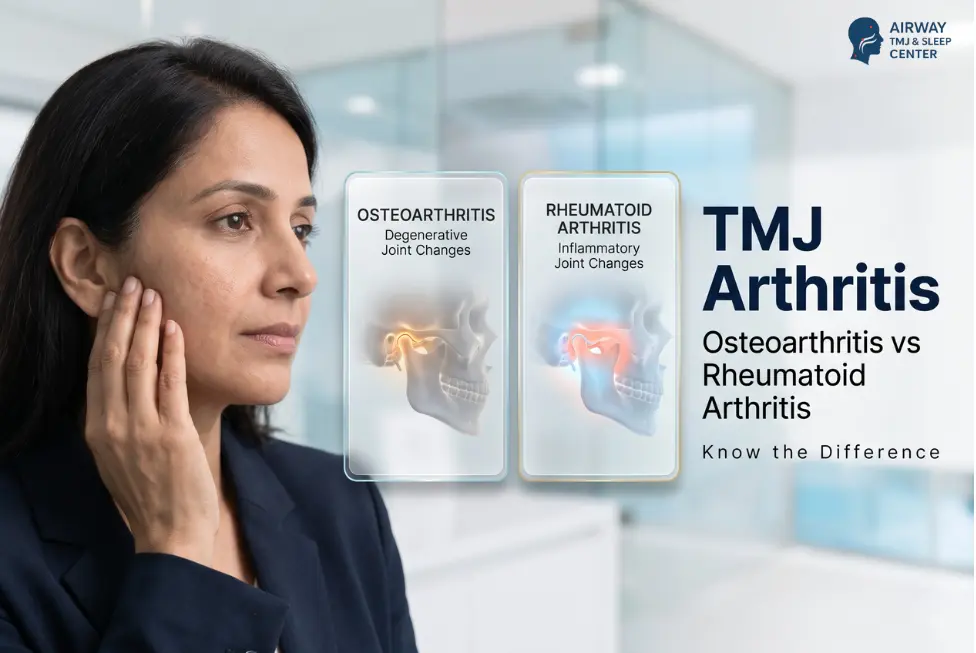
TMJ Arthritis

TMJ Arthritis: Osteoarthritis vs Rheumatoid Arthritis

TMJ arthritis means an arthritic process affecting the jaw joint. It may be degenerative, as in osteoarthritis, or inflammatory, as in rheumatoid arthritis or another rheumatic disease. Both can cause pain near the ear, stiffness, grating, limited opening or bite change. Symptoms alone cannot identify the subtype: examination comes first, CBCT or CT answers bony […]
Read More
TMJ Physiotherapy Appointment Guide

TMJ Physiotherapy: What Happens at an Appointment?

TMJ physiotherapy is supervised rehabilitation for jaw pain and movement problems—not a generic exercise sheet. A first appointment usually combines a detailed history and safety screen with checks of jaw and neck movement, symptom triggers and daily function. Treatment may include education, individually selected exercise, a home programme and manual therapy when appropriate. Progress should […]
Read More
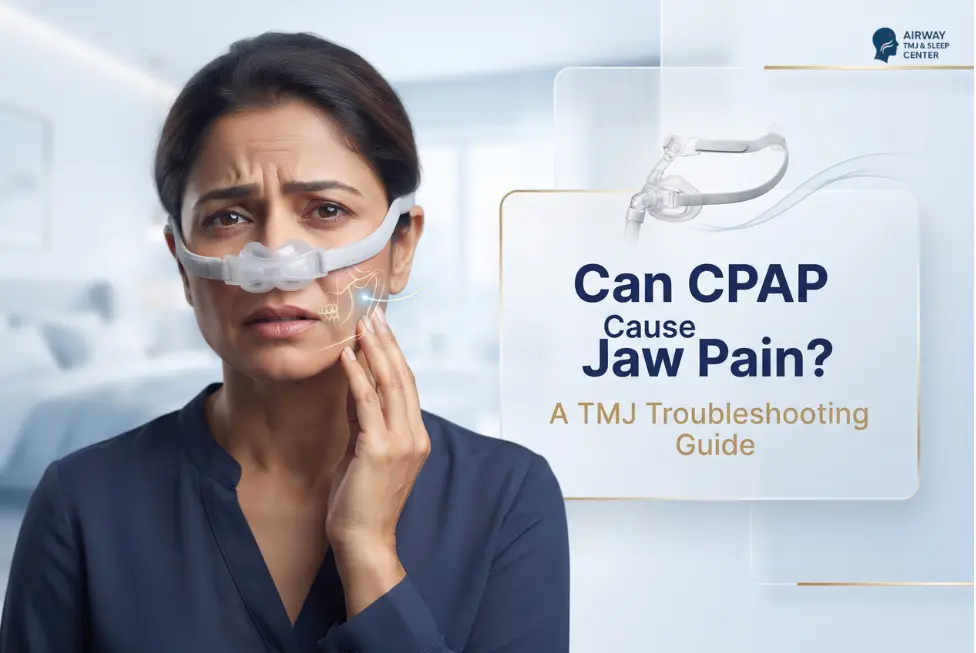
patient wear cpap that cause jaw pain

Can CPAP Cause Jaw Pain? A TMJ Troubleshooting Guide

CPAP can coincide with jaw pain, but it does not universally cause or worsen TMJ disorders. Mask contact, headgear tension, mouth leak, clenching, sleep position, a dental problem or pre-existing TMD may contribute. Keep prescribed PAP in place while the sleep team checks fit, leak and device data. Persistent pain, locking or bite change deserves […]
Read More
Mild Sleep Apnea

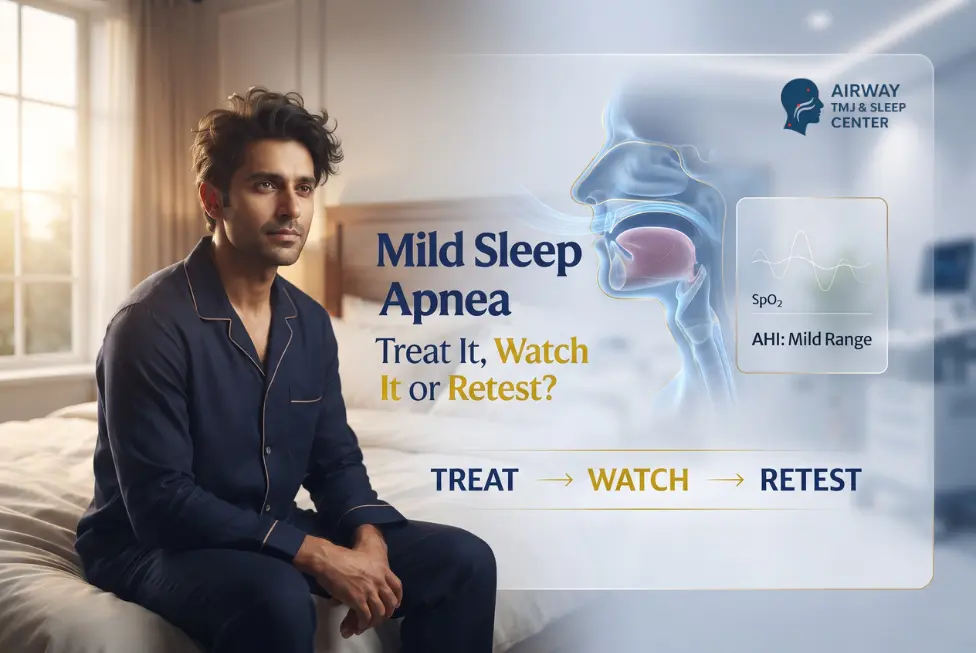
Mild Sleep Apnea: Treat It, Watch It or Retest?

Mild sleep apnea usually means 5 to fewer than 15 breathing events per hour, but the AHI label alone does not decide treatment. Treatment becomes more compelling with excessive sleepiness, impaired sleep-related quality of life, hypertension, meaningful oxygen changes or safety risk. Active monitoring may suit some low-symptom patients after clinician review. Retesting is selective […]
Read More
Sleep Apnea Oral Appliances Side Effect

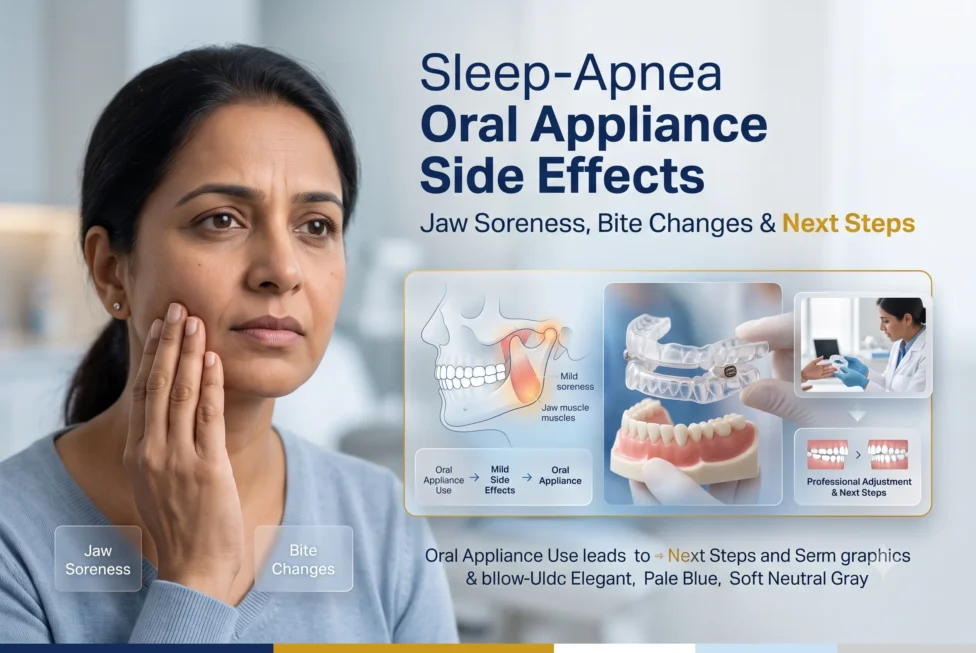
Sleep-Apnea Oral Appliance Side Effects: Jaw Soreness, Bite Changes and Next Steps

Mild jaw or tooth soreness, extra saliva, dry mouth and a temporary morning bite change can occur when you begin a sleep-apnea oral appliance. Symptoms that worsen, persist, affect chewing or opening, leave your bite altered, damage the mouth or involve a loose or cracked device need professional review. Do not file, heat, bend or […]
Read More