
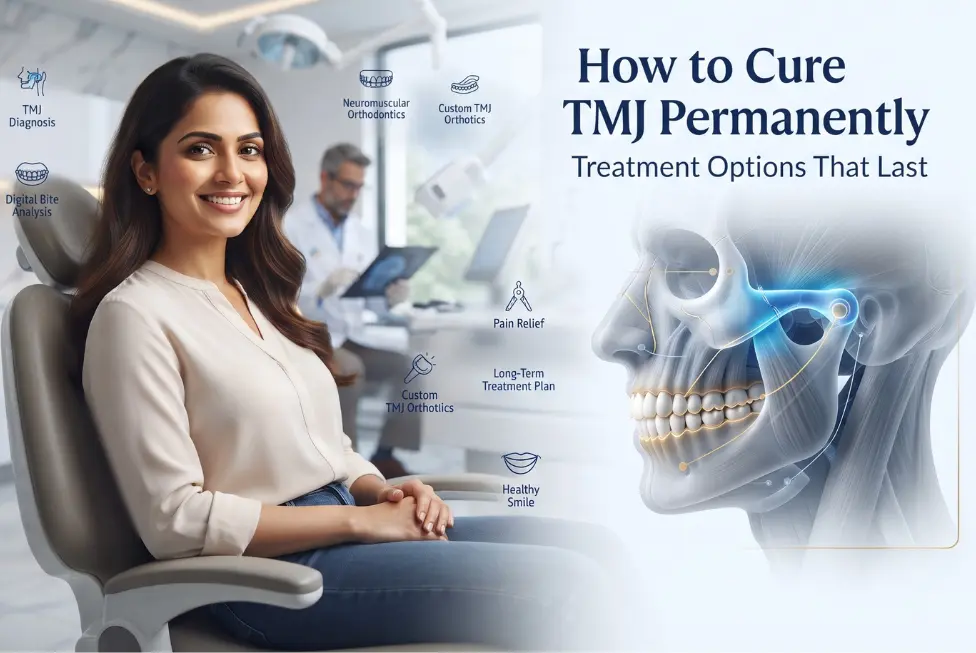
How to Cure TMJ Permanently: Treatment Options That Actually Last
If you have been searching how to cure TMJ permanently, you are probably tired of temporary fixes — a painkiller here, a soft diet there — while the jaw pain, clicking and headaches keep coming back. The honest answer is encouraging: for most people, lasting TMJ relief is achievable. The key is matching the right TMJ treatment to the real cause, in the right order.
This guide walks through the full TMJ treatment ladder — from simple self-care to custom orthotics, neuromuscular therapy and, rarely, surgery — so you understand which TMJ treatment options give the best chance of permanent relief, how long it takes, and what happens if a TMJ disorder is left untreated.
🔑 Key Takeaways
- For many people, TMJ can be managed to the point of lasting, permanent relief — especially when the true cause is identified first.
- Treatment works best as a ladder: start with conservative, reversible care and escalate only if needed.
- A custom orthotic, bite and muscle (neuromuscular) therapy and habit change resolve most cases without surgery.
- Surgery is a last resort for a small number of structural cases.
- Lasting relief depends on diagnosis — treating the cause, not just the symptom.
Can TMJ be cured permanently?
For many people, yes — TMJ can be relieved permanently when the underlying cause is correctly identified and treated. Most cases settle with conservative care such as a custom orthotic, bite and muscle therapy and habit change. A smaller number need advanced treatment, and surgery is rarely required.
It helps to be realistic and hopeful at the same time. A TMJ disorder is not one single disease — it is a group of problems affecting the jaw joint and muscles, often driven by several factors at once. Because of that, ‘cure’ looks different for different people. When the main driver is clenching, an uneven bite or muscle strain, treating it well often produces lasting, permanent relief. When there is established joint damage, the goal shifts to long-term control with little or no pain. Either way, the path to a permanent result starts with an accurate diagnosis.
Why doesn’t TMJ go away on its own?
Mild TMJ flare-ups can settle on their own, but persistent TMJ usually continues because the cause — clenching, grinding, an uneven bite, stress or a joint problem — is still active. Without addressing that driver, symptoms tend to return or slowly worsen.
Many people wait, hoping the problem will fade. Occasional jaw soreness after a stressful week or a long dental visit often does ease. But when jaw pain, clicking or limited opening persists for weeks, it usually means a driver is still at work — night-time grinding, a bite that overloads the joint, chronic muscle tension, or a displaced disc. Those do not resolve by themselves, which is why a focused TMJ treatment plan matters.
What are the treatment options for TMJ?
TMJ treatment options form a ladder: first, conservative self-care and habit change; then a custom orthotic and neuromuscular bite therapy; then physiotherapy and, in selected cases, injections; with surgery reserved as a last resort. Most people improve at the lower, reversible steps.
The most effective approach to how to fix TMJ is a stepped one — start gentle and reversible, and only escalate if needed. Here is the ladder most TMJ specialists follow:
| Step | What it involves | Best suited for |
| 1. Self-care & habits | Soft diet, jaw rest, heat/cold, stress and posture work, stopping gum-chewing | Early or mild TMJ; first line for everyone |
| 2. Custom orthotic | A precisely fitted appliance to unload the joint and calm muscles | Clenching, grinding, bite-related strain |
| 3. Neuromuscular & physical therapy | Bite balancing, jaw physiotherapy, targeted exercises | Muscle-driven pain, posture and alignment issues |
| 4. Injections (selected cases) | Trigger-point or muscle-relaxing injections for stubborn muscle pain | Persistent myofascial pain not settling with the above |
| 5. Surgery (last resort) | Minimally invasive or, rarely, open joint procedures | Specific structural joint problems only |
What is the first-line treatment for TMJ?
First-line TMJ treatment is conservative and reversible: rest the jaw, eat softer foods, apply heat or cold, ease clenching and stress, improve posture, and do gentle jaw exercises. Many early cases improve with these steps alone, which is why they are always tried first.
Before anything irreversible, simple measures do a lot of the work. Resting the jaw, avoiding hard and chewy foods, applying warmth to tight muscles, and reducing clenching and stress all help calm an irritated joint. Gentle, guided jaw exercises can restore comfortable movement. For many people with early TMJ, this conservative stage is enough to turn things around — and it is the safest place to start.
How do orthotics and neuromuscular treatment help?
A custom orthotic repositions and unloads the jaw so overworked muscles and the joint can settle, while neuromuscular therapy rebalances how your bite and muscles work together. Together they address the mechanical cause of TMJ, which is what makes relief last rather than return.
When clenching, grinding or an uneven bite is driving the pain, a custom orthotic is often the turning point. Unlike a generic, store-bought guard, a properly designed appliance is built to your jaw to relieve pressure on the joint and relax the muscles. Neuromuscular treatment goes a step further, using objective measurements of how your jaw moves and how your muscles fire to guide a more balanced bite. Because this targets the underlying mechanics, it offers one of the best routes to lasting, permanent TMJ relief.
When is advanced treatment or surgery needed?
Advanced options — such as injections — are considered when conservative care and an orthotic haven’t settled stubborn muscle pain. TMJ surgery is a last resort for a small number of clear structural joint problems, not a routine treatment, and is only considered after other options have been tried.
Most people never need surgery. When pain is persistent and clearly muscular, some clinics use trigger-point or muscle-relaxing injections to break the cycle. Surgical options — usually minimally invasive — are reserved for specific structural problems in the joint that have not responded to thorough conservative care. The guiding principle is to do the least invasive thing that works.
Important: Surgery should only be considered after a careful, complete evaluation and a fair trial of reversible treatments. If surgery is suggested early without that, a second opinion is reasonable.
How long does it take to cure TMJ?
Many people notice improvement within a few weeks of starting the right treatment, with fuller, lasting relief over a few months. The timeline depends on the cause, how long symptoms have been present, and how consistently the plan — orthotic, exercises, habit change — is followed.
There is no single number, but a pattern is common. Early, muscle-driven TMJ often eases within weeks of good conservative care and an orthotic. More established or long-standing problems take longer and need consistency — wearing the appliance as advised, doing the exercises, and managing clenching and stress. Lasting relief is usually a gradual settling rather than an overnight switch, which is why following the plan matters as much as the plan itself.
What happens if TMJ is left untreated?
Untreated TMJ can progress from occasional clicking and soreness to chronic jaw pain, frequent headaches, ear and neck pain, worn teeth and limited opening or locking. Persistent pain can also sensitise the nervous system, making it harder to treat — so earlier care usually means simpler, more permanent relief.
Ignoring a TMJ disorder rarely makes it disappear. Over time, ongoing clenching and joint overload can wear down teeth, worsen disc problems, and spread pain into the head, ears, neck and shoulders. Episodes of locking or limited opening can become more frequent. And long-standing pain can become ‘centralised,’ meaning the nervous system amplifies it — which makes treatment slower. The good news is that acting earlier almost always makes a permanent result easier to achieve.
How does Airway find the right TMJ treatment for you?
Airway TMJ & Sleep Center starts with objective diagnostics — K7 jaw tracking, EMG muscle testing, CBCT imaging and airway analysis — to pinpoint the real cause, then builds a personalised, mostly reversible plan. Treating the true driver is what gives the best chance of lasting, permanent relief.
Permanent relief depends on accuracy. Rather than guessing, our team in Noida measures how your jaw moves and how your muscles work, images the joint where needed, and screens your bite, sleep and airway. From there we build a stepped, personalised TMJ treatment plan — beginning with conservative, reversible care and escalating only if necessary. If you have been wondering how to cure TMJ permanently, the most reliable first move is a proper, comprehensive evaluation.
Book a TMJ Treatment Consultation in Noida
If TMJ pain keeps coming back, a precise diagnosis is the fastest route to lasting relief. Airway TMJ & Sleep Center uses K7 jaw tracking, EMG, CBCT and airway analysis to find the real cause and tailor your TMJ treatment. Serving Noida and Delhi NCR.
📍 C-98/10, C Block Market, Sector 41, Noida 201301 | 📞 +91 87566 15325 | 🌐 airwaytmjsleep.com
Disclaimer: This article is for general education only and is not a substitute for professional medical or dental advice. Outcomes vary between individuals; please seek an in-person evaluation.