
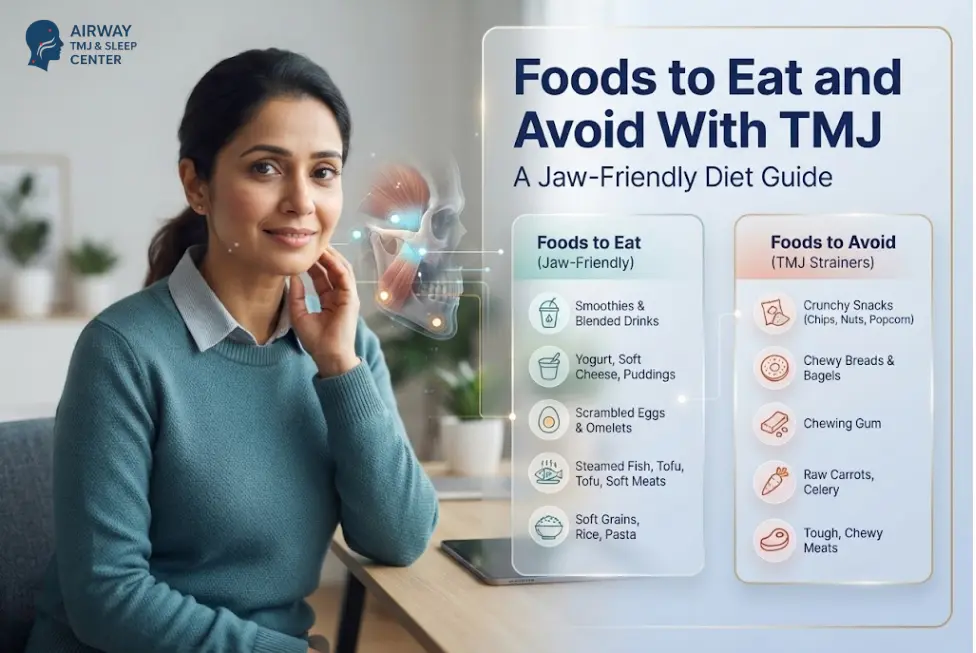
Foods to Eat and Avoid With TMJ: A Jaw-Friendly Diet Guide
Medically reviewed by Dr. Kishlay Gaur, FICCMO Fellow — TMJ, Orofacial Pain & Dental Sleep specialist, Airway TMJ & Sleep Center, Noida (Delhi NCR).
If your jaw is sore, clicking, or tight, what you eat can either calm it down or make it worse. The simple rule: choose soft, easy-to-chew foods that don’t force your jaw to work hard, and lean towards anti-inflammatory options. Avoid hard, crunchy, chewy, and big-bite foods — along with excess caffeine, which can increase clenching. Diet won’t fix the underlying problem on its own, but during a flare-up it can bring real relief while you get the jaw properly assessed and treated.
A TMJ disorder puts your jaw joint and chewing muscles under constant strain. Every hard bite and every prolonged chew adds load to a joint that is already struggling — which is why so many people notice their jaw pain spikes around mealtimes. The good news is that a few practical food swaps can take pressure off the jaw almost immediately, and support lower inflammation over time.
Why what you eat affects your jaw
Two things are at play. First is mechanical load: hard and chewy foods make your jaw muscles and joint work much harder, aggravating pain and inflammation. Second is diet-driven inflammation: highly processed, sugary, or very acidic foods can fuel the body’s inflammatory response, while anti-inflammatory foods help calm it. Caffeine adds a third factor — it can raise muscle tension and clenching, especially in people who grind their teeth.
Foods to avoid with TMJ
These are the everyday culprits that overwork a sore jaw:
- Hard and crunchy foods — nuts, seeds, popcorn (especially unpopped kernels), raw carrots and celery, whole apples, crusty bread, bagels, and chewing on ice.
- Chewy, sticky foods — tough or overcooked meat, chewing gum, caramel, toffee, taffy, and gummy sweets that keep the jaw working.
- Big-bite foods — thick burgers, large sandwiches, and corn on the cob that force you to open wide.
- Excess caffeine and alcohol — strong coffee and energy drinks can increase clenching and muscle tension; alcohol can worsen night-time grinding.
- Very acidic or highly processed foods — for some people, a lot of citrus, tomato, vinegar, or sugary processed food can add to inflammation.
Foods to eat with TMJ
Aim for soft, nourishing, and anti-inflammatory. A jaw-friendly plate still looks and tastes good:
- Soft proteins — eggs, dal and lentils, tofu, paneer or soft cheese, fish, curd/yogurt, hummus, well-cooked beans, and protein or milk shakes.
- Soft grains — khichdi, soft rice, oats, poha, upma, idli, well-soaked or soft roti, pasta, and porridge.
- Soft fruits — bananas, ripe papaya and melon, stewed apple, mango, and blended smoothies.
- Well-cooked vegetables — steamed, stewed, mashed, or made into soup — mashed potato, pumpkin, and cooked leafy greens like spinach.
- Anti-inflammatory helpers — fatty fish (omega-3), leafy greens, turmeric and ginger, healthy fats, and clear soups or bone broth, which are gentle and nourishing.
Nutrients that may help
Beyond texture, a few nutrients support the muscles and tissues around the jaw. Magnesium (found in leafy greens, legumes, and bananas) helps muscles relax and is associated with less clenching. Omega-3 fatty acids from fatty fish help counter inflammation. Staying well hydrated matters too. If you’re considering a supplement such as magnesium, check with your doctor first — food sources are the best place to start.
Simple tips that make mealtimes easier
- Cut food into small pieces so you never have to open wide.
- Cook vegetables until soft; steam, stew, or mash rather than eating them raw.
- Chew slowly and evenly on both sides, not just one.
- On a flare-up day, lean on smoothies, soups, khichdi, curd, and dal.
- Give up chewing gum, and cut back on strong coffee if you clench.
A simple soft-food day
If your jaw is flaring, a gentle day might look like this:
- Breakfast — oats or poha with a banana, or curd with soft fruit.
- Lunch — dal, soft rice or khichdi, and well-cooked vegetables.
- Snack — a smoothie or a protein/milk shake.
- Dinner — soup, mashed vegetables, and soft-cooked fish, paneer, or eggs.
When diet alone isn’t enough
A jaw-friendly diet is one of the fastest ways to ease a TMJ flare — but it manages the symptom, not the cause. If your jaw pain, clicking, locking, or headaches keep coming back, the underlying issue in your bite, muscles, or joint needs a proper assessment. At Airway TMJ & Sleep Center in Noida, we use measurable diagnostics to find the root cause and build a non-surgical plan — and if you grind your teeth, a custom night guard can protect your jaw while you eat and sleep. Individual results may vary.
Book a TMJ evaluation in Noida
If softer meals keep bringing relief, that’s a strong sign your jaw needs attention. Book a TMJ consultation or call +91 87566 15325 — no pressure, no obligation.